
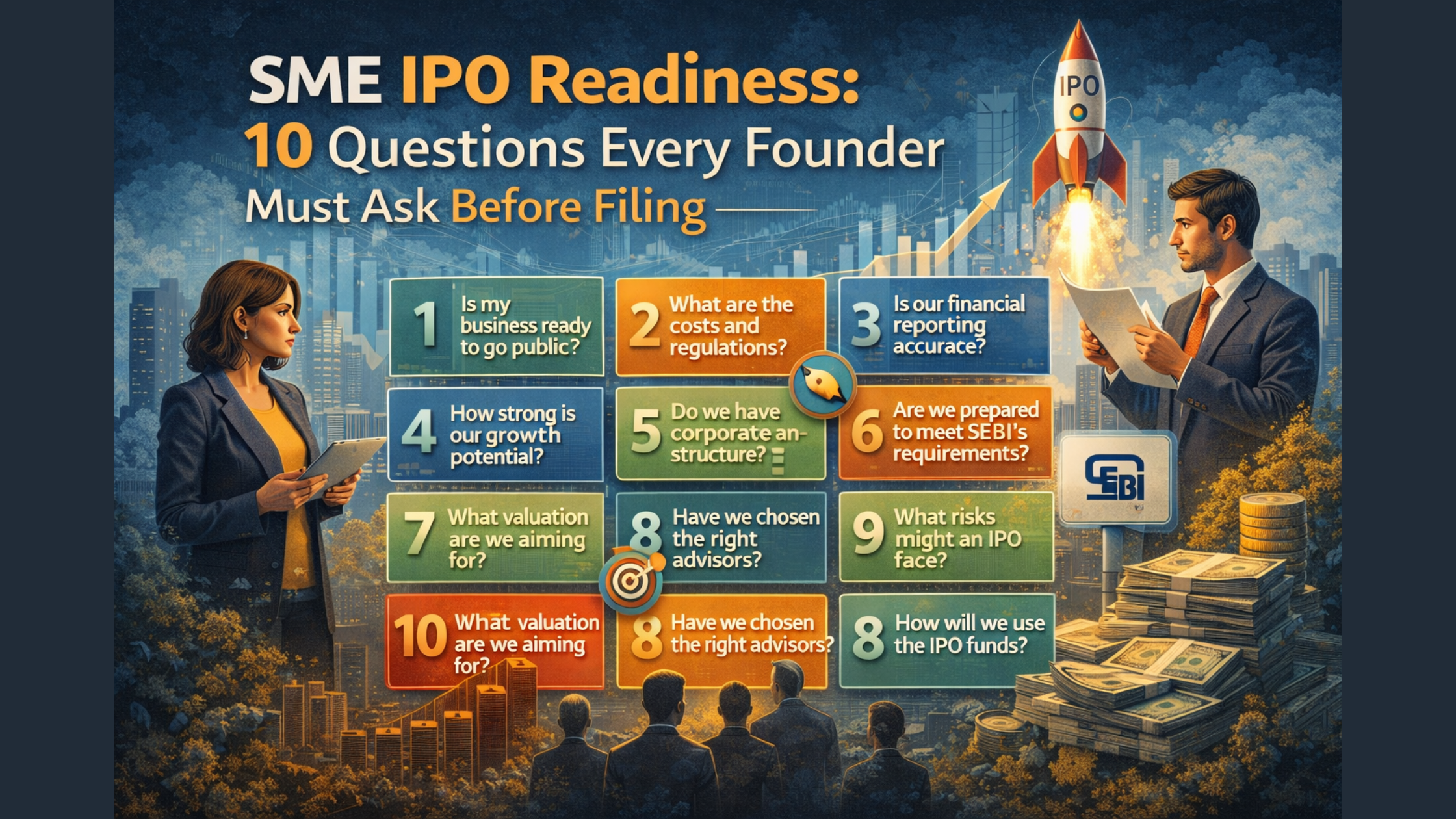

SME IPO Readiness: 10 Questions Every Founder Must Ask Before Filing
India’s SME IPO market is maturing rapidly, with increasing participation from both growth-stage companies and investors seeking new opportunities. But here’s a hard truth:
Not every SME is IPO-ready, even if they meet SEBI’s eligibility criteria.
An IPO is not just a fundraising event, it’s a transformation in how your company operates, reports, and is perceived. Before you even start drafting your DRHP (Draft Red Herring Prospectus), you need clarity on one critical point:
👉 Is your business truly ready to go public?
If you’re a founder of a manufacturing SME, tech startup, or family-owned enterprise with ambitions to list, start by asking yourself these 10 questions:
1. Are My Financials Audit-Ready & Transparent?
Have your financials been audited for at least 3 years with clean reports? Public markets demand clarity, consistency, and discipline in disclosures.
Red flag: Irregular accounting standards, outdated ERP, or manual books.
2. Do I Have A Defined Business Model That Can Scale?
Investors don’t fund products—they fund predictable, repeatable business models. You must prove that your business is not only viable but scalable.
Example: Strong order book, high client retention, or geographic expansion plans.
3. Is My Corporate Governance IPO-Grade?
This includes your Board composition, internal audit mechanisms, related party transactions, and more.
A promoter-heavy board with no independent directors may not pass scrutiny.
4. Are My Promoters & Stakeholders Legally & Financially Compliant?
Background checks are standard. Ensure that directors and key shareholders have no pending litigations or regulatory defaults.
All KYC, DINs, PAN, GST filings, and tax returns should be in order.

5. Do I Understand My Valuation & Cap Table Health?
Many founders enter IPOs without understanding the real worth of their company or the dilution impact.
Seek a pre-IPO valuation assessment from your IPO consultant or merchant banker.
6. Is My Debt Structure Aligned With IPO Objectives?
An IPO can be used to retire debt, but a bloated or unclear debt structure can spook investors.
Optimize your D/E (debt-equity) ratio before filing.
7. Can My Team Handle Life Post-IPO?
Being listed means investor calls, quarterly results, SEBI compliance, and media attention.
You’ll need a strong CFO, CS, and compliance ecosystem to stay afloat.
8. Are My Promoters & Founders Aligned For Dilution And Public Scrutiny?
The IPO journey will challenge egos, decision-making styles, and family-run control.
Open dialogue with co-founders and family stakeholders is essential.

9. Do I Have A Clear Use Of Funds Plan?
You need to show how IPO proceeds will be deployed: growth CAPEX, debt repayment, product expansion, etc.
Vague answers like “for working capital” will weaken investor confidence.
10. Have I Chosen The Right IPO Advisors?
Your IPO consultant, legal counsel, merchant banker, and auditor must be aligned with your growth vision.
Choose partners who specialize in SME IPOs—not just large-cap listings.
People Also Asked:
1. What does SME IPO readiness mean?
SME IPO readiness refers to preparing a company’s finances, governance, documentation, and compliance systems so it can successfully file for and launch an SME IPO.
2. What are the key eligibility requirements for an SME IPO in India?
Companies generally need a proven business track record, audited financial statements, proper corporate governance, and compliance with stock exchange and regulatory requirements before filing an SME IPO.
3. Why should founders assess IPO readiness before filing?
Assessing readiness helps identify gaps in financial reporting, legal compliance, or business strategy before approaching investors and regulators.
4. What documents are required for an SME IPO?
Typical documents include audited financial statements, promoter and director KYC, a Draft Red Herring Prospectus (DRHP), legal compliance reports, and a valuation report.
5. Who helps companies prepare for an SME IPO?
Businesses usually work with SEBI-registered merchant bankers, auditors, legal advisors, and IPO consultants who guide the due diligence, documentation, and filing process.
Final Thought
An IPO doesn’t make you a public company. It reveals whether you were one all along.
As a corporate finance consultant who has advised several Indian SMEs, I strongly recommend that founders conduct an internal IPO readiness audit at least 12–18 months before the intended listing.
Ready for the next step?
