
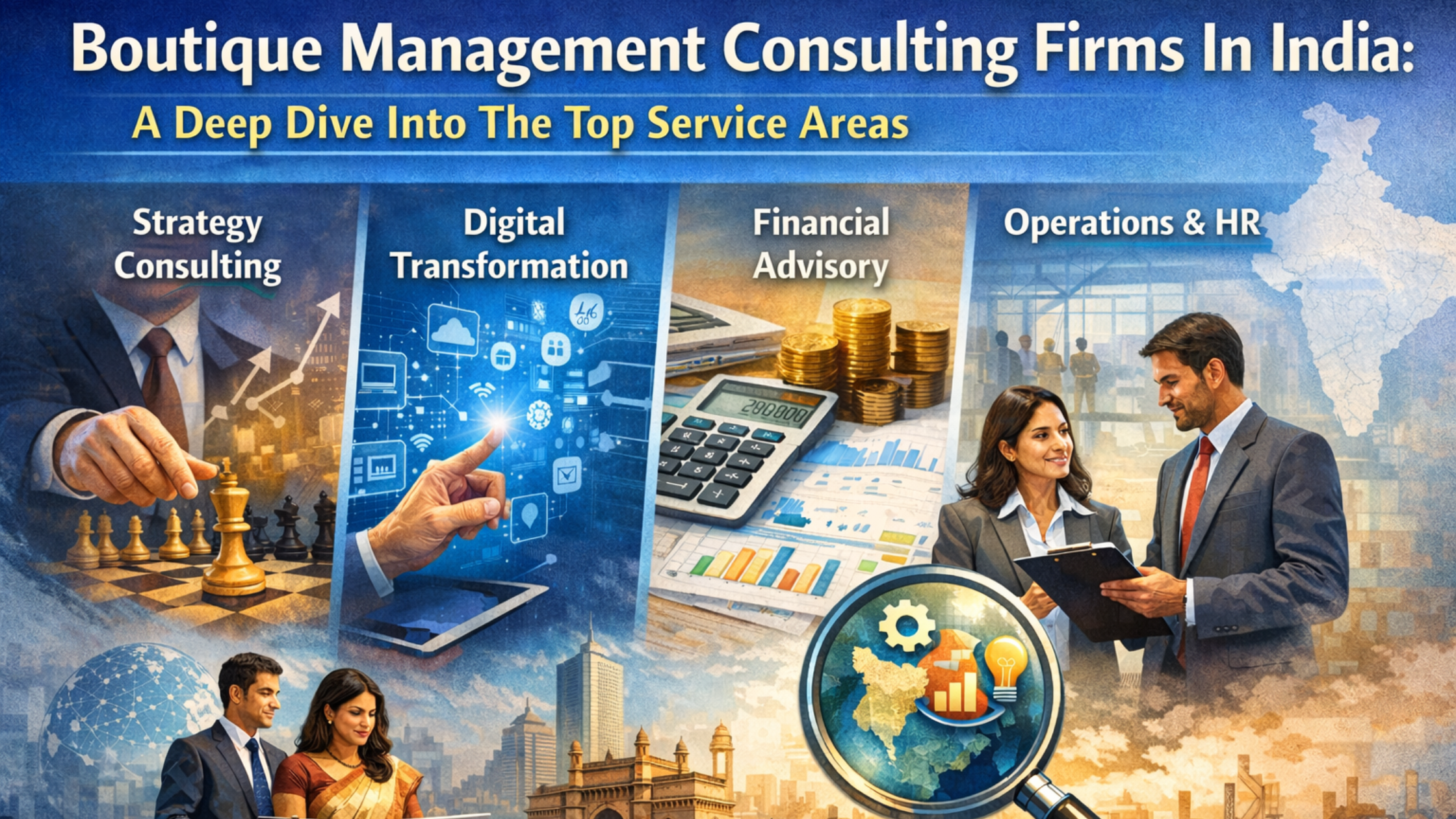

Boutique Management Consulting Firms In India: A Deep Dive Into The Top Service Areas
The Indian business landscape is defined by two things: rapid, complex growth and the dominance of the MSME and family-managed business (FMB) sector. This environment creates a dynamic need for specialized expertise, positioning management consulting firms in India as essential partners for scaling and optimization.
While global firms dominate the strategy segment for large corporations, a vibrant market of niche and domestic firms focuses intensely on the operational and implementation challenges specific to Indian businesses.
Here is a deep dive into the top service areas driving demand for Boutique management consulting firms in India:
1. Strategic Finance And Corporate Advisory
This service area is vital for companies seeking to professionalize and raise capital. It marks a fundamental shift from viewing finance as merely a compliance function to a strategic growth driver.
- Virtual CFO Services: Highly sought after by MSMEs, this involves external consultants providing high-level financial planning, budgeting, and performance management, enabling the business to access senior financial expertise without the high fixed cost.
- IPO Readiness and Capital Structuring: Consulting firms guide founders through the rigorous processes of due diligence, corporate restructuring, and financial modeling required for raising equity (especially via the SME IPO platforms) or large-scale debt.
- Profit Maximization and Cost Optimization: Consultants use advanced data analytics to identify bottlenecks in the P&L, focusing on inventory optimization, expense control, and segment profitability analysis to deliver measurable margin improvements.
2. Digital Transformation And ERP Implementation
For Indian businesses, “Digital Transformation” is synonymous with moving beyond manual, “Excel-Only” finance and adopting integrated systems. This is an area where implementation focus is paramount.
- ERP Strategy and Deployment: This involves selecting the right Enterprise Resource Planning (ERP) platform (e.g., SAP Business One, TallyPrime, customized solutions) and managing the complete implementation lifecycle. The goal is to integrate accounting, inventory, supply chain, and reporting functions onto a single, reliable platform.
- Process Re-engineering: Consultants map existing, often chaotic, workflows and redesign them for efficiency and control. This typically includes creating Standard Operating Procedures (SOPs) to ensure consistency across all functional areas.
- Data and Analytics: Implementing real-time dashboards and Business Intelligence (BI) tools that turn raw data into actionable insights for the management team, facilitating faster, data-driven decisions on cash flow and market strategy.
3. Family Business Governance And Succession Planning
A significant portion of India’s economy is run by family-managed businesses. These firms face unique challenges related to emotional conflict, lack of formal structure, and the complex process of generational handover.
- Governance Frameworks: Consultants help FMBs create formal structures, such as Independent Boards of Directors and Family Councils, to clearly separate family matters from business decisions.
- Conflict Resolution and Role Definition: This service focuses on defining clear, non-overlapping roles for family members within the business (e.g., separating ownership from management) and establishing objective protocols for dispute resolution.
- Succession Planning: Guiding the transition of leadership from the founder generation to the next. This involves mentoring, competency assessment, and legal structuring to ensure business continuity and preserve family legacy.

4. Regulatory Compliance And Taxation (GST Focus)
Given India’s complex tax environment, compliance consulting is a fundamental and ever-changing requirement, particularly in the realm of Goods and Services Tax (GST).
- GST Advisory and Litigation Support: Advising clients on the impact of frequent regulatory changes (such as the new Invoice Management System—IMS or GSTAT operationalization), ensuring timely compliance, and representing the client in appeals and disputes.
- Input Tax Credit (ITC) Optimization: Helping businesses systematically reconcile GSTR-2A/2B/3B data to maximize legitimate ITC claims while minimizing compliance risk and penalties.
- Internal Control Reviews: Designing and implementing robust financial controls to prevent fraud, minimize errors, and ensure all statutory filings (GST, Income Tax, ROC) are completed accurately and on time.
FAQ: Boutique Management Consulting Firms In India
1. What is a boutique management consulting firm?
A boutique management consulting firm is a specialized consulting firm that focuses on specific industries or services and offers highly customized business solutions.
2. How are boutique consulting firms different from large consulting firms?
Boutique firms provide more personalized consulting, niche expertise, and direct involvement from senior consultants, unlike large global consulting firms.
3. What services do boutique consulting firms offer?
They typically offer services such as business strategy, operational improvement, financial advisory, digital transformation, and business restructuring.
4. Why do businesses choose boutique consulting firms?
Businesses prefer boutique firms for their specialized expertise, flexible approach, and tailored solutions for specific business challenges.
5. Are boutique consulting firms suitable for SMEs?
Yes, boutique consulting firms are often ideal for SMEs and family businesses because they provide focused strategies and hands-on implementation support.
Conclusion: Choosing The Right Partner
When searching for management consulting firms in India, founders must look beyond the firm’s size. The most effective partners for MSMEs and FMBs are those who specialize in implementation over mere strategy. They offer a blend of strategic financial acumen, hands-on digital deployment capability, and sensitivity to the unique governance dynamics of family-managed enterprises. Investing in the right consulting partner ensures that strategies are not just visionary, but executable, translating directly into sustainable profitability and scale.
