
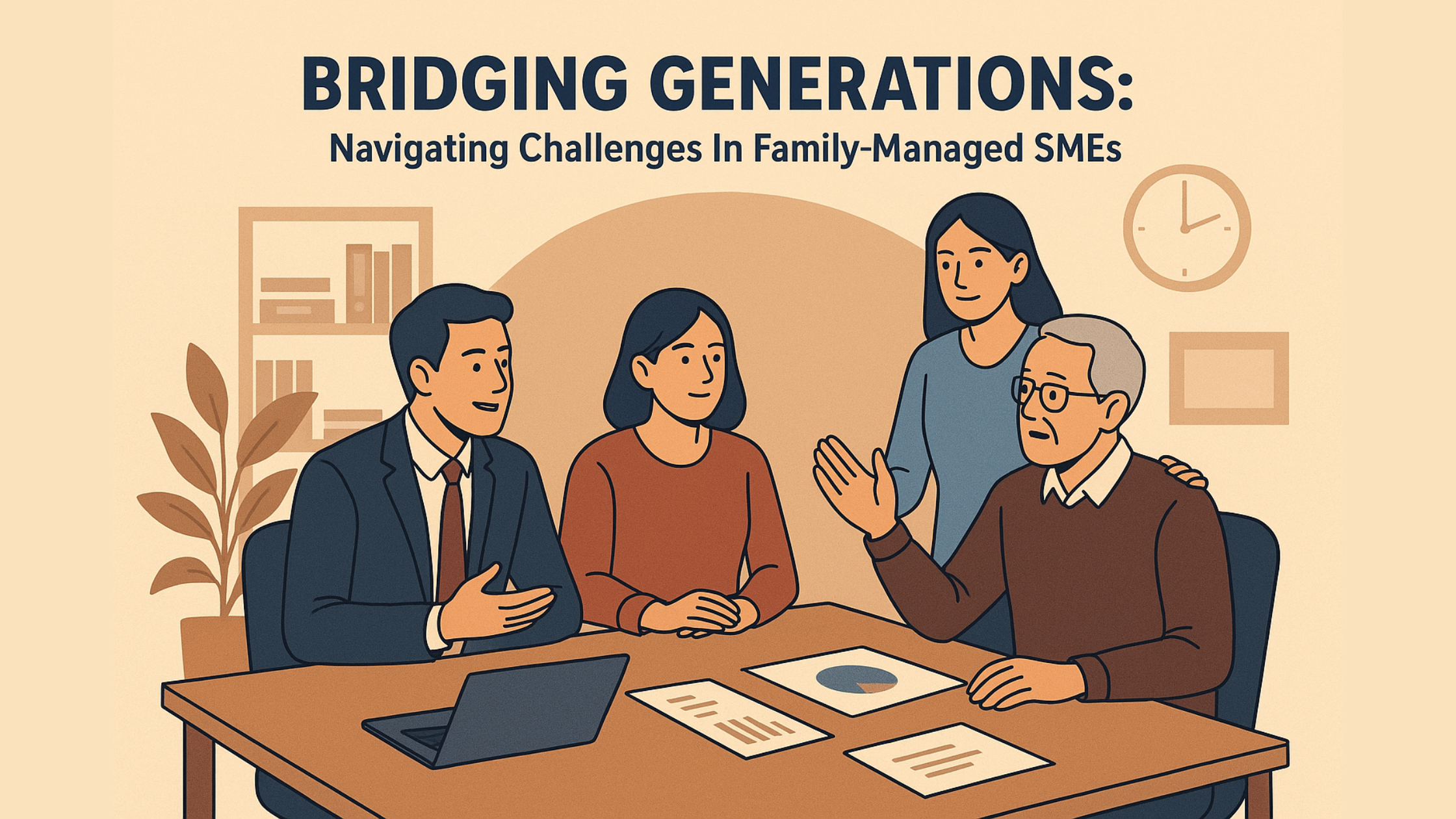

Bridging Generations: Navigating Challenges In Family-Managed Businesses
Family businesses have powered small and medium enterprises (SMEs) for generations, shaping markets with their values and relationships. Yet, as leadership transitions from founders to next-gen managers, age-old strengths can turn into obstacles. The tension between tradition and progress is not only operational—it’s deeply cultural and emotional. By learning to identify and navigate these recurring issues, families can unlock enduring success.
Legacy Ways Vs. Need for Change
Old adage: “Why change what has always worked?”
Founders cherish the methods that have delivered results for decades, but younger leaders often see those same methods as outdated for today’s fast-moving markets. The lesson: keep proven systems, but layer new practices for competitiveness. Seniors can mentor through change rather than resist it, and juniors should appreciate legacy while modernizing gradually.
Technology: Expense Or Investment?
Old adage: “We ran this business without computers—why start now?”
For older leaders, technology may seem like an avoidable expense, while next-gen managers view CRM, ERP, and digital tools as essential for efficiency. The way forward is clear ROI: younger leaders can pilot new tech and demonstrate measurable benefit, and seniors can see tech adoption as an investment in future relevance.
Loyalty Vs. Agility In Employees
Decades-long service creates a core of loyal team members, but inflexibility may stall growth. Seniors value loyalty and tradition, while juniors look for adaptability. Upskilling and training, with empathy and respect for longtime staff, allow businesses to evolve without losing their cultural roots.
Measuring Sincerity: Hours Or Productivity?
Old adage: “Hard work means long hours.”
Older generations equate commitment with time spent at work. The younger workforce favors productivity and data-driven results. Both perspectives matter: metrics should shift from presence to output, but juniors must balance flexibility with discipline and accountability.
Ego And The Founder’s Role
Old adage: “I am the business.”
Founders rightly take pride in their social respect and achievements, but this can make it tough to cede control. Transitioning founders to mentorship roles, rather than operational micromanagement, lets experience guide without stifling initiative. Juniors must acknowledge past achievements, steering change with respect and patience.
Clarity And Trust In The Next Generation
Seniors sometimes hesitate to delegate because juniors lack clear vision. The solution is to offer limited responsibility and accountability, so experience and confidence can develop. Younger leaders should present actionable plans rather than just ideas, earning trust through results.

Spending Before Earning
Old adage: “Earn first to feel the value of money.”
Demanding new infrastructure before proving oneself is seen as unwise by many founders. Juniors should focus on piloting changes and showing tangible gains before seeking large investments. Seniors, meanwhile, can evaluate whether changes represent innovation or unnecessary spending.
Social Pressure And Peer Comparisons
Family businesses face constant comparisons—what are the children achieving, how does the next generation measure up? The best remedy is patience: focusing on long-term value rather than rushing for social approval builds lasting capability.
Experience Vs. Formal Education
Old adage: “We didn’t need an MBA; why should they?”
Founders believe hard-earned experience trumps formal training, but today’s market can reward blended knowledge. Respect for each other’s path—combining experience, modern tools, and global perspectives—accelerates learning without undervaluing legacy.
Gender And Inclusion Barriers
Male leadership has long been the norm, but embracing inclusion brings new energy. Seniors should see diversity as strength, while juniors advocate for women in leadership through results, not confrontation.
Respecting Past Growth And Achievements
Growth in earlier decades took time due to market and resource constraints. Juniors should value and respect this, even as new technologies shorten learning cycles. A “Generational Index”—where past 10-year growth now happens in 4—provides perspective and respect across eras.
Temperament And Patience
Older leaders embody patience, shaped by slow progress; younger leaders seek urgency and rapid results. Compatibility comes from balancing urgency with sustainability—combining the endurance learned from struggle with the speed of modern innovation.

From Joint Families To Individual Identities
The transition from joint to nuclear families has propelled demands for independent identity. Support individual aspirations, but remember that true independence grows slowly and still benefits from family legacy as a valuable resource.
Social Media: Illusion Vs. Reality
Old adage: “Success takes sweat, not just show.”
While social media highlights overnight wins, real business stories are often slow and challenging. Seniors should help juniors see beyond superficial comparisons, using digital platforms for learning and branding rather than self-doubt.
Internal Family Competition
As business environments change, rivalry can move inside the family. Seniors should create clear governance and collaboration structures, and juniors must treat family members as allies, not adversaries, for healthy unity.
Delegation: From Pride To Necessity
Founders built success doing everything themselves, but today’s scale requires delegation. Sharing context and systems helps older leaders understand why delegation matters, while juniors must show how modern platforms make it efficient.
Shortcuts Vs. Smart Speed
Old adage: “There are no shortcuts to success.”
There’s a difference between speed and shortcuts; modern tools bring efficiency, not shortcutting values. Juniors should respect past effort, showing humility in success; seniors should appreciate new routes to results as long as fundamentals remain strong.
FAQ – Bridging Generations In Family Businesses
1. What does bridging generations mean?
It’s about aligning the founder and next generation in a family-run SME to ensure smooth leadership transition and continued growth.
2. Why is it important?
It preserves legacy while embracing new ideas, reduces conflicts, and ensures long-term business continuity.
3. What challenges do families face?
Resistance to change, unclear roles, emotional conflicts, and lack of succession planning.
4. When should planning start?
Ideally 3–5 years before transition—so the next generation can learn, adapt, and gain credibility.
5. How can governance help?
Clear roles, defined decision rights, and family councils prevent misunderstandings and build accountability.
6. How to induct the next generation?
Start with exposure outside the business, structured mentoring, and gradual responsibility transfer.
7. How to manage conflicts?
Encourage open communication, mutual respect, and if needed, involve neutral advisors.
8. What are the key benefits?
Stronger growth, better harmony, continuity of legacy, and a professional business culture.
9. What first steps can SMEs take?
Hold family discussions, map future roles, define governance, and seek expert guidance.
10. How can C&B India help?
We guide family-run SMEs through succession, governance design, and next-gen integration with structured consulting support.
Conclusion: Building Together, Not Apart
The strongest family businesses thrive when generations build together, blending resilience and vision. Founders must evolve from protectors of legacy to mentors of change, while next-gen leaders should honor foundations and act responsibly. By respecting each other’s context—past struggles and future possibilities—SME family businesses can transform from conflict zones into launchpads for shared, sustainable growth.
Also read:
- Why It’s Important To Define Roles In A Family Owned Business
The Role Of An IPO Consultant In Transitioning Family-Owned Businesses To Public Companies
