
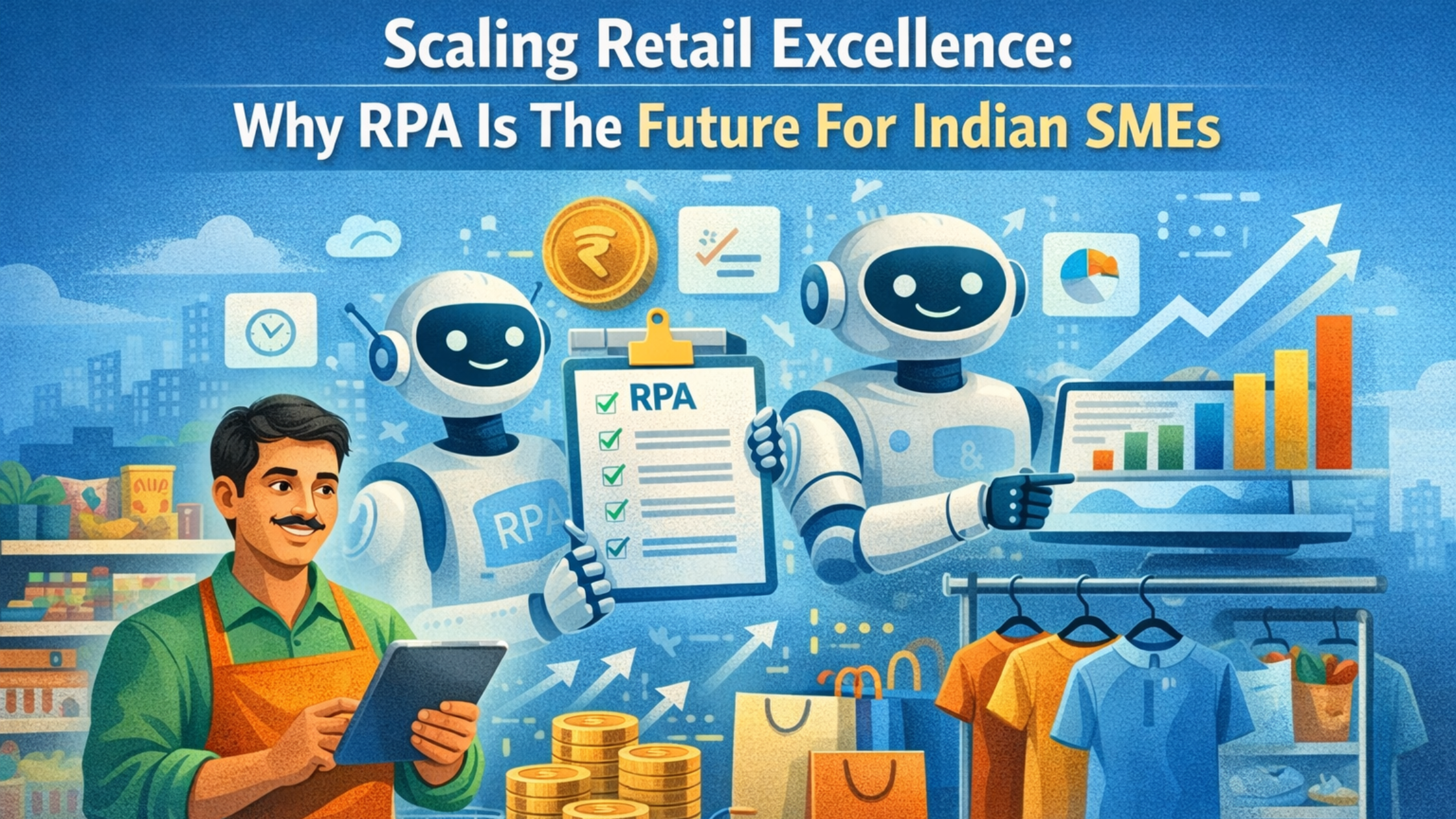
- Why RPA Is The Future For Indian SMEs
- The Synergy: Business Process Re-engineering (BPR) + RPA
- High-Impact Use Cases In Retail
- Starting Your Automation Journey
- Measuring Success
- People Also Asked:
- 1. What is RPA in retail?
- 2. Why is RPA important for Indian SMEs?
- 3. Which retail tasks can RPA automate?
- 4. Is RPA affordable for small retailers?
- 5. Can RPA work with existing retail software?
- Conclusion
In the competitive landscape of Indian retail, Small and Medium Enterprises (SMEs) are under constant pressure to reduce operating costs, improve turnaround times, and deliver a consistent customer experience. While traditional growth strategies focus on sales, the real competitive advantage often lies in operational efficiency. This is where Robotic Process Automation (RPA), guided by the Best Management Consulting Firm in Chennai, becomes a game-changer.
RPA isn’t about physical robots; it uses software “bots” to automate structured, rule-based business processes. These bots simulate human interactions—like data entry, reconciliation, and reporting—but with far greater speed and 100% accuracy.
Why RPA Is The Future For Indian SMEs
Many SMEs struggle with manual dependencies that hinder growth. RPA directly addresses these challenges:
- Month-End Workloads: Instead of teams staying late to close books, bots perform continuous updates and reporting.
- Manual Transaction Posting: Bots automate billing, Purchase Orders (PO), and Goods Received Notes (GRN) across fragmented systems.
- Eliminating Human Error: Whether it’s pricing or stock updates, RPA ensures an audit trail and zero data entry errors.
- Repurposing Talent: By taking over repetitive tasks, RPA allows your workforce to focus on customer-facing and growth-oriented activities.
The Synergy: Business Process Re-engineering (BPR) + RPA
Deploying automation on a broken process only speeds up the failure. The most effective approach is to combine Business Process Re-engineering (BPR) with RPA. During BPR, processes are redesigned to be leaner and customer-centric; RPA then executes these redesigned processes at scale.
This combination helps in:
- Standardizing process execution across multiple stores or units.
- Enforcing strict approvals and internal controls.
- Reducing manpower dependency and overall turnaround time (TAT).
High-Impact Use Cases In Retail
Where can your business see the most immediate ROI? Here are the top categories for RPA implementation:
- Purchase & Inventory: Automated PO creation based on reorder levels and 3-way invoice matching (Vendor Invoice ↔ PO ↔ GRN).
- Sales & Store Operations: Daily sales report submission from POS to ERP and automated validation of card or UPI settlements.
- Finance & Accounts: Automated journal postings for month-end closing and GST tax classification support.
- HR & Admin: Seamless employee onboarding and automated payroll calculations based on biometric data.
- Customer Experience: Automated feedback capture and instant communication for delayed orders.
Starting Your Automation Journey
For an SME, the roadmap to RPA doesn’t require expensive ERP migrations. A typical implementation follows these steps:
- Identify & Map: Find high-volume, repetitive tasks and map the “As-Is” process.
- Redesign: Use BPR to create the “To-Be” workflow.
- Select Tools: Many SMEs start with Power Automate due to its low cost and easy integration with the Microsoft ecosystem.
- Pilot: Start with low-complexity, high-impact areas like finance postings or stock updates.
Measuring Success
To ensure your investment is delivering value, track these key performance indicators (KPIs):
- Percentage reduction in manual workload and TAT (typically 60–90% faster).
- Improvement in data accuracy and reduction in compliance exceptions.
- Cost savings and repurposed employee hours.
People Also Asked:
1. What is RPA in retail?
Robotic Process Automation (RPA) uses software bots to automate repetitive retail tasks like inventory updates, billing, and order processing.
2. Why is RPA important for Indian SMEs?
RPA helps SMEs reduce manual work, improve accuracy, lower costs, and scale operations efficiently.
3. Which retail tasks can RPA automate?
RPA can automate inventory management, invoicing, order processing, supplier communication, and reporting.
4. Is RPA affordable for small retailers?
Yes. Many RPA solutions are scalable and allow SMEs to start small with automation.
5. Can RPA work with existing retail software?
Yes. RPA can integrate with existing ERP, accounting, and retail management systems without major changes.
Conclusion
RPA is no longer just a “tech investment”—it is a strategic enabler of operational excellence. By partnering with the Best Management Consulting Firm in Chennai, retail SMEs can navigate the risks of automation, such as “staff fear of replacement,” by positioning bots as a support system rather than a replacement.
Retailers who adopt these technologies early will be better positioned to scale, manage multi-store operations seamlessly, and maintain a sharp competitive advantage.
Ready to automate your growth? Contact Consulting & Beyond to learn how we integrate BPR and RPA to transform your business operations.

 Blog
Blog
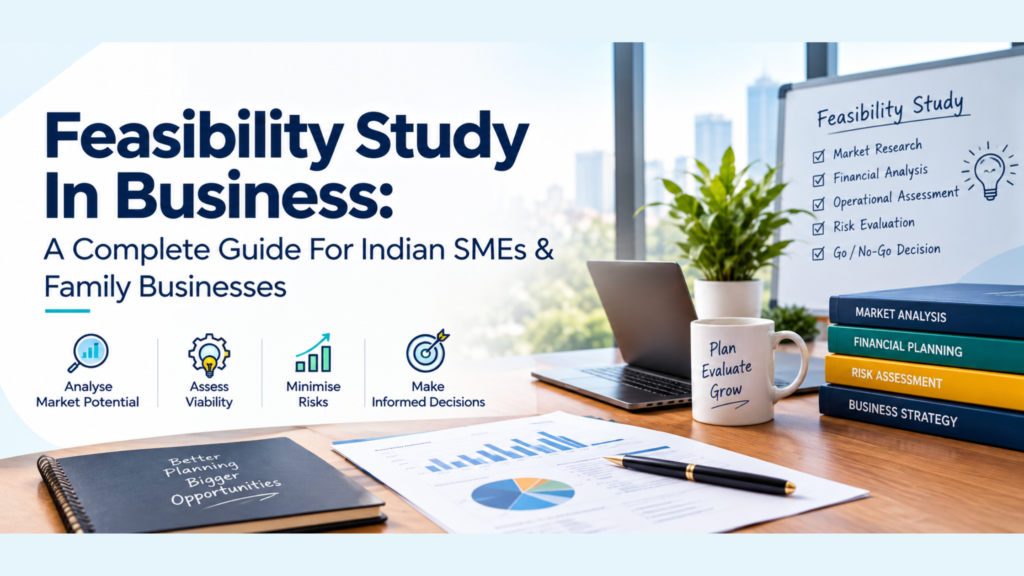
Feasibility Study In Business: A Complete Guide For Indian SMEs & Family Businesses
A feasibility study is essential for making informed business decisions, especially for Indian SMEs and family-owned businesses. A…
 Rathandeep U
Read
Rathandeep U
Read
 Blog
Blog
How To Write A Funding Pitch: A Complete Guide For Indian SMEs & Family Businesses
How to Write a Funding Pitch is an essential skill for Indian SMEs and family businesses seeking investors,…
Rathandeep U
Read
 Blog
Blog
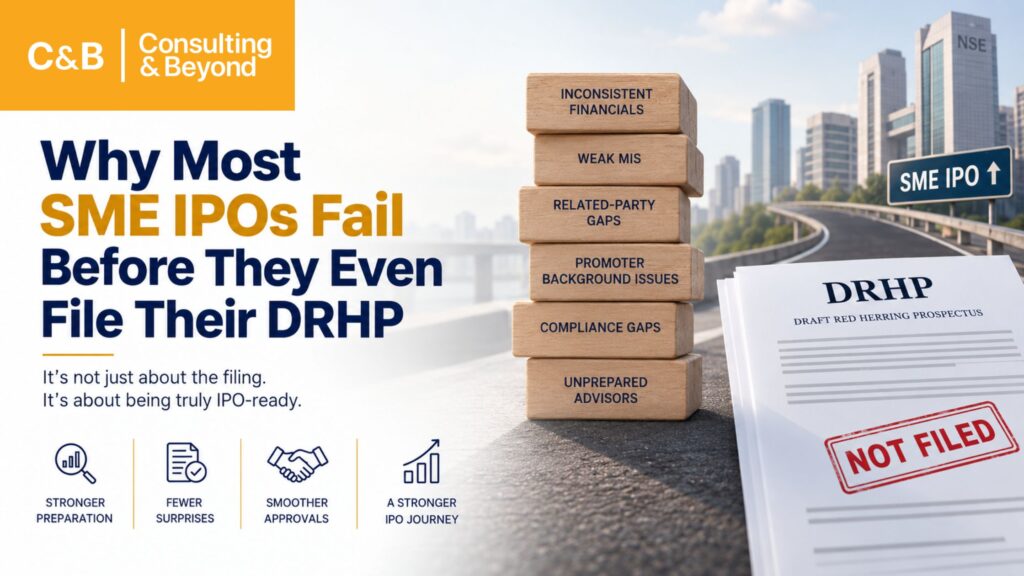
Why Most SME IPOs Fail Before They Even File Their DRHP
Most SME IPO Fails because they begin the IPO journey without adequately preparing their financials, governance, compliance, documentation,…
Rathandeep U
Read