
Succession Or Sale? : Deciding Between Passing The Torch To The Next Generation Or A Private Equity Exit

- The Emotional Weight Behind The Decision
- When Succession Makes Sense
- 1. The Next Generation Actually Wants To Lead
- 2. The Business Still Has Growth Potential
- 3. The Family Can Separate Ownership From Operations
- 4. Governance Structures Exist
- The Risks Of Succession
- ❌ Founder Dependency
- ❌ Sibling Conflict
- ❌ Unprepared Successors
- ❌ Legacy Thinking
- ❌ Talent Drain
- Option 2: Private Equity Exit: Selling The Business
- When A PE Exit Makes Sense
- 1. No Interested Successor Exists
- 2. The Founder Wants Liquidity
- 3. Market Timing Is Favorable
- 4. The Business Needs Institutional Scale
- The Emotional Reality Of Selling
- Succession Vs Sale: Key Questions Every Family Must Ask
- Ask These Honestly:
- 1. Does the next generation truly want this business?
- 2. Is the founder ready to let go?
- 3. Can the business survive institutionalization?
- 4. Is wealth diversification necessary?
- 5. What future creates more peace?
- The Hybrid Model: Partial Exit + Succession
- Example:
- The Role Of A Family Business Consultant
- FAQ – Succession Or Sale?
- 1. What does succession or sale mean?
- 2. What is business succession planning?
- 3. What is a private equity exit?
- 5. Why do owners choose private equity exits?
- 6. When should succession or exit planning begin?
- 7. Can family succession and private equity work together?
- 8. What factors should influence the decision?
- 9. What are the risks of family succession?
- 10. Which option usually gives higher financial returns?
- Final Thought
- Closing Insight
For many Indian business families, the most difficult strategic decision is not about expansion, technology, or competition.
It is this:
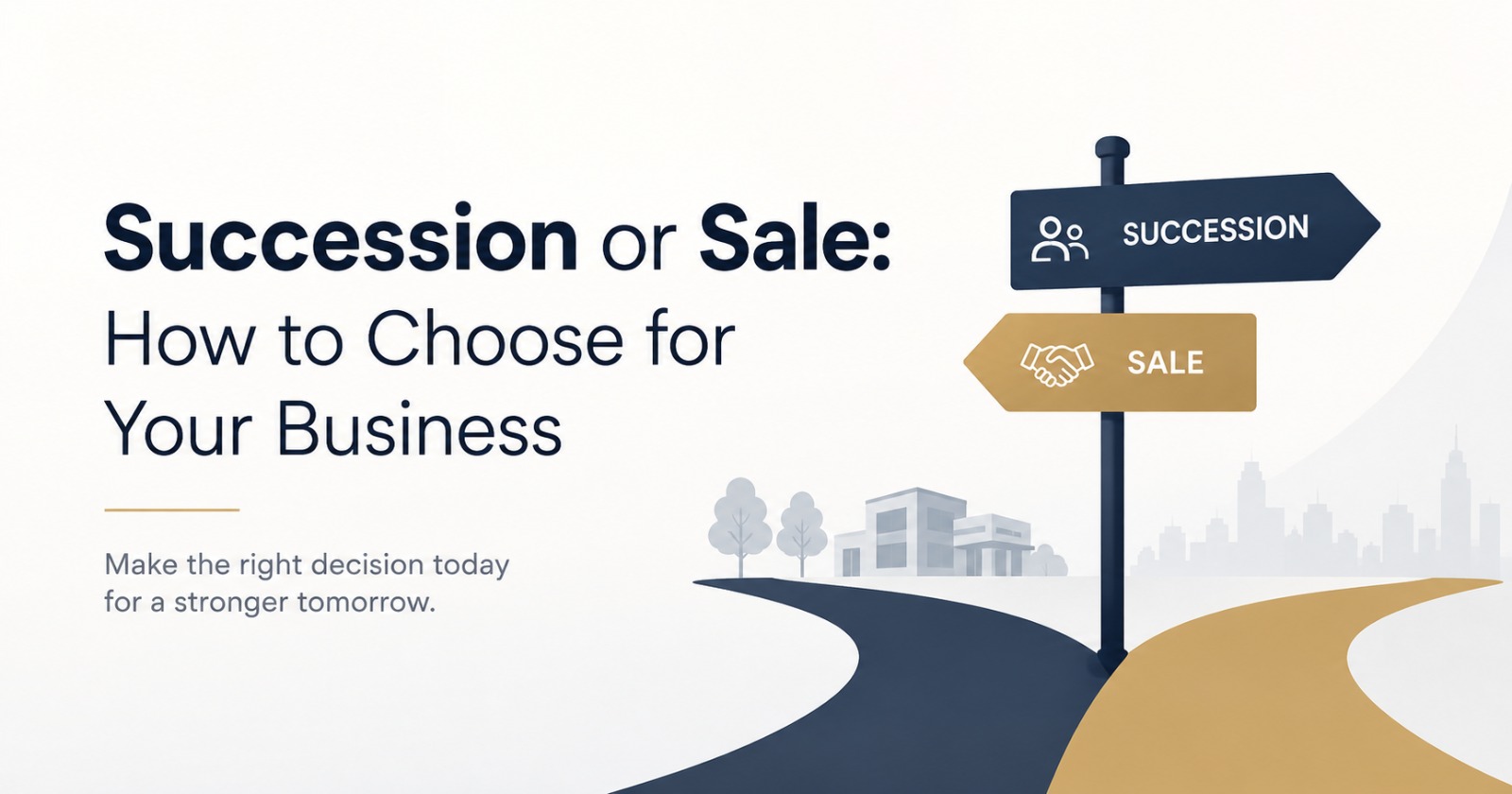
“Succession or Sale: How to Choose for Your Business?”
As a Family Business Consultant, I’ve seen promoters spend decades building successful businesses, only to reach a crossroads where emotions, legacy, wealth, and practicality collide.
For some families, succession creates multi-generational wealth and continuity.
For others, a strategic sale unlocks freedom, liquidity, and peace.
The challenge is that most promoters approach this decision emotionally instead of structurally.
This blog explores how family businesses should evaluate the two paths objectively.
The Emotional Weight Behind The Decision
Unlike professionally built corporations, family businesses are deeply personal.
The business is often:
- The founder’s identity
- The family’s reputation
- The source of wealth
- The glue holding generations together
Which is why the question is never:
❌ “Should we sell?”
It is actually:
✅ “What future do we want for the family and the business?”
Option 1: Succession: Passing The Torch
Succession means transferring:
- Leadership
- Ownership
- Decision-making authority
…from one generation to the next.
Done correctly, succession can transform a founder-led business into a lasting institution.
Done poorly, it can destroy both the business and family relationships.
When Succession Makes Sense
As a Family Business Consultant, I usually recommend succession when these conditions exist:
1. The Next Generation Actually Wants To Lead
This sounds obvious, but it is often ignored.
Many successors:
- Join due to obligation
- Stay due to guilt
- Operate without conviction
A successful transition requires:
✅ Genuine interest
✅ Leadership capability
✅ Long-term commitment
The next generation should not inherit a responsibility they never chose.
2. The Business Still Has Growth Potential
If the business:
- Has strong margins
- Is scalable
- Has competitive advantages
- Can professionalize further
…then succession may create far more long-term value than an immediate exit.
3. The Family Can Separate Ownership From Operations
One of the biggest mistakes family businesses make is assuming:
“Every owner must be involved in management.”
Not true.
A mature family business structure allows:
- Some family members to lead
- Some to remain passive shareholders
- Some to exit partially
Without conflict.
4. Governance Structures Exist
Succession without systems creates chaos.
Successful family transitions require:
- Family constitutions
- Decision authority matrices
- Board governance
- Compensation frameworks
- Conflict resolution mechanisms
This is where a Family Business Consultant becomes critical.
Because succession is not an emotional conversation.
It is an organizational redesign process.
The Risks Of Succession
Many businesses underestimate the challenges.
Common succession risks include:
❌ Founder Dependency
The founder cannot let go.
❌ Sibling Conflict
Roles and ownership become unclear.
❌ Unprepared Successors
The next generation lacks operational capability.
❌ Legacy Thinking
The business resists change and innovation.
❌ Talent Drain
Professional employees leave due to family politics.
Without structure, succession can quietly weaken a business over time.
Option 2: Private Equity Exit: Selling The Business
For some promoters, the smarter decision is not succession.
It is a strategic exit.
A Private Equity (PE) transaction allows founders to:
- Monetize years of hard work
- De-risk family wealth
- Professionalize the business further
- Step back gradually
In many cases, PE firms also retain founders during the transition phase.
When A PE Exit Makes Sense
1. No Interested Successor Exists
This is increasingly common in India.
The next generation may prefer:
- Startups
- Global careers
- Technology businesses
- Independent paths
And that is not failure.
Forcing unwilling successors into leadership usually damages both family and business.
2. The Founder Wants Liquidity
Many promoters are “asset rich but cash flow dependent.”
Most wealth remains trapped inside:
- Factories
- Real estate
- Inventory
- Business equity
A PE exit creates:
✅ Wealth diversification
✅ Retirement security
✅ Family financial stability
3. Market Timing Is Favorable
Sometimes, valuation opportunities are too attractive to ignore.
If:
- Industry multiples are high
- Consolidation is happening
- Investor demand is strong
…an exit may maximize value creation.
4. The Business Needs Institutional Scale
Some businesses reach a stage where:
- Systems are insufficient
- Capital needs rise sharply
- Global expansion requires institutional expertise
Private Equity can bring:
- Strategic guidance
- Governance discipline
- Growth capital
- Professional leadership

The Emotional Reality Of Selling
Even financially successful exits can feel emotionally difficult.
Many founders experience:
- Loss of identity
- Lack of purpose
- Emotional emptiness after exit
Because for decades:
“The business was their life.”
This is why sale planning must include:
- Personal transition planning
- Role redesign
- Legacy discussions
- Family alignment
A good exit is not just financially successful.
It must also be psychologically sustainable.
Succession Vs Sale: Key Questions Every Family Must Ask
Ask These Honestly:
1. Does the next generation truly want this business?
Not “Will they join?”
But:
“Will they fight to build it?”
2. Is the founder ready to let go?
Not symbolically.
Operationally.
Can decisions happen without founder approval?
3. Can the business survive institutionalization?
Can it move from:
👉 Founder-driven
to
👉 System-driven?
4. Is wealth diversification necessary?
Would the family be financially safer if wealth moved beyond the business?
5. What future creates more peace?
This is important.
Not every family business must continue forever.
Sometimes preserving family harmony matters more than preserving ownership.
The Hybrid Model: Partial Exit + Succession
Increasingly, Indian family businesses are choosing a middle path.
Example:
- PE acquires minority stake
- Founder monetizes partially
- Next generation continues leadership
- Governance becomes professionalized
This approach:
✅ Reduces risk
✅ Creates liquidity
✅ Retains family control
✅ Improves scalability
For many mid-sized businesses, this becomes the ideal solution.

The Role Of A Family Business Consultant
Whether the path is succession or sale, families often need an objective external perspective.
A Family Business Consultant helps:
- Facilitate difficult conversations
- Create governance systems
- Structure succession frameworks
- Prepare businesses for investor readiness
- Align family and business goals
Because most transitions fail not due to lack of intelligence…
…but due to lack of structure.
FAQ – Succession Or Sale?
1. What does succession or sale mean?
It means choosing between passing the business to the next generation or selling it to investors like private equity firms.
2. What is business succession planning?
It is the process of preparing future leaders to take over the business smoothly.
3. What is a private equity exit?
A private equity exit means selling your business to investors for growth, expansion, or liquidity.
4. Which option preserves family legacy?
Succession planning helps preserve family ownership, values, and business culture.
5. Why do owners choose private equity exits?
They often seek higher valuation, immediate liquidity, and faster business growth.
6. When should succession or exit planning begin?
Ideally, owners should start planning several years before retirement or exit.
7. Can family succession and private equity work together?
Yes, hybrid models allow families to retain partial ownership while investors support growth.
8. What factors should influence the decision?
Financial goals, successor readiness, business valuation, and long-term vision are key factors.
9. What are the risks of family succession?
Common challenges include family conflicts, leadership gaps, and unclear planning.
10. Which option usually gives higher financial returns?
Selling to private equity often provides a larger immediate financial payout.
Final Thought
The real question is not:
❌ “Should we continue the business?”
The real question is:
✅ “What structure creates the best future for both the family and the business?”
For some families, that future is succession.
For others, it is a well-planned exit.
Neither choice is wrong.
What matters is making the decision intentionally—not emotionally, reactively, or too late.
Closing Insight
The strongest business families are not the ones that hold on forever.
They are the ones that know:
- When to pass the torch
- When to professionalize
- And when to let go gracefully
That is the difference between a business that merely survives…
and a legacy that endures.
Your Business Is More Than a Balance Sheet. It’s Your Legacy.
If you’re considering succession, selling your business, or stepping away from the business you’ve built, make sure you understand the financial and strategic implications before making a decision.
Our Family Business Consultant can help you evaluate your options, assess business valuation, and plan a transition that protects both value and legacy.

 Funding your business
How To Write A Business Plan For A Bank Loan
How To Write A Business Plan For A Bank Loan is an essential guide for entrepreneurs seeking business…
 Rathandeep U
Read
Rathandeep U
Read
 Blog
Blog
Feasibility Study In Business: A Complete Guide For Indian SMEs & Family Businesses
A feasibility study is essential for making informed business decisions, especially for Indian SMEs and family-owned businesses. A…
Rathandeep U
Read
 Blog
Blog
How To Write A Funding Pitch: A Complete Guide For Indian SMEs & Family Businesses
How to Write a Funding Pitch is an essential skill for Indian SMEs and family businesses seeking investors,…
Rathandeep U
Read